Published 26th October, 2026
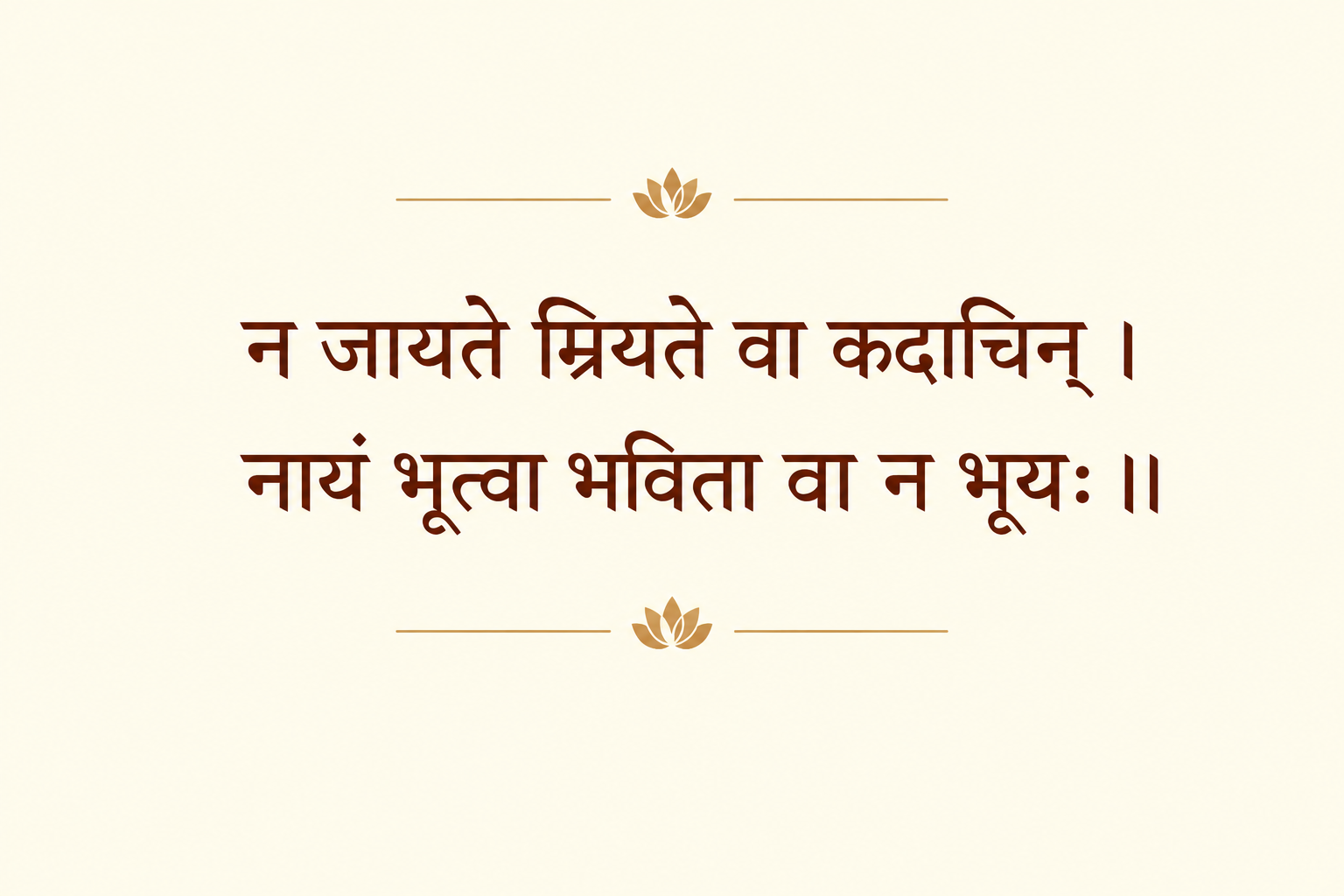
न जायते म्रियते वा कदाचिन् । नायं भूत्वा भविता वा न भूयः ।।
Meaning:
The self is neither born nor does it ever die. It has never been created, nor will it ever be destroyed. It is immortal and forever beyond birth and death.
Essence:
This passage from the Bhagavad Gita responds to one of humanity's longest-standing terrors: the fear of death. Through Krishna's words, Arjuna is told that who we really are lies beneath the temporary body we possess. The body is born, evolves, ages, and ultimately perishes, but the true self doesn’t.
As a youth, these words may sound alien. However, life is always a teacher of impermanence, and it teaches this lesson far sooner than we imagine.
This verse provides another perspective on the changes happening around us and inside of us.
Consider that the river water is always flowing through it, but the river itself retains its identity. The same is true of our lives: we change, but the “I am” in us remains constant.
The Gita calls on us to recognize that part of our lives.
This concept may offer a new form of peace.
It may even change how we live. If one’s true self does not depend on looks, possessions, successes, or temporary states, there is no need to hold on to those aspects so tightly. We can enjoy them without believing that they make up our whole being.
A career may shift. A relationship may shift. The body may shift. Even a whole phase in life may come to an end.
And yet, something about us remains constant.
Maybe this is what makes this shloka so beautiful in its simplicity: life may be temporary, but our knowledge of who we are remains forever.
Indeed, we might not be able to arrest change or immortality. But we should learn to accept change and immortality with greater understanding and acceptance rather than fear.
That is why this verse does not ask us to reflect only on death. Instead, it is teaching us how to live despite the fear of death.