Published 1st October, 2026
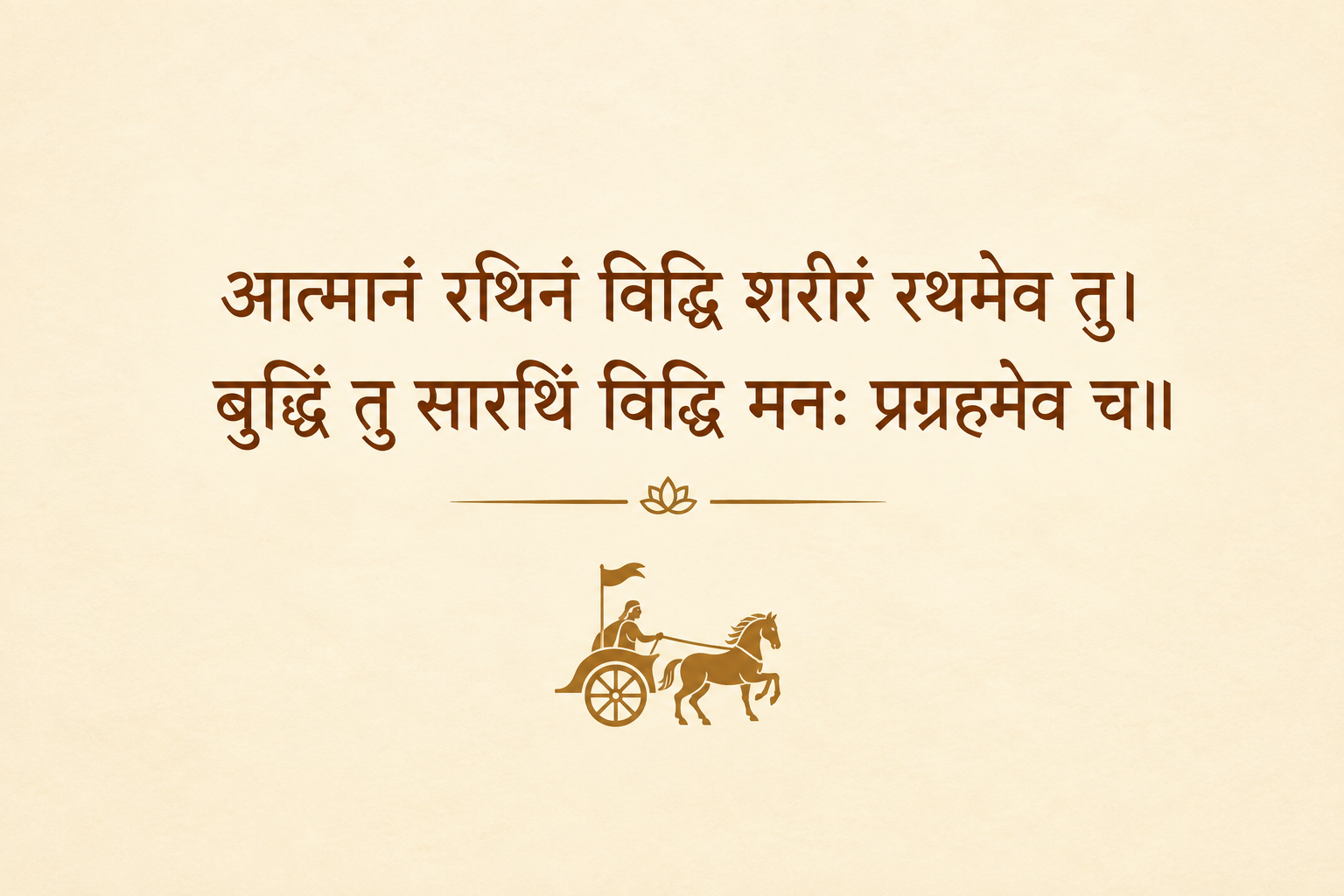
??????? ????? ?????? ????? ????? ??? ??????? ?? ?????? ?????? ??? ?????????? ??
Meaning
Realize the Self as the rider, the body as the vehicle, the mind as the reins, and the intellect as the driver. In this analogy from the Katha Upanishad, human existence is likened to a journey. The body carries us, the mind reacts to what is there, and the intellect directs us where to go.
Essence
Consider a young person at a crossroads. One choice will bring instant riches. But another decision will require many years of study. One choice promises excitement but is unreliable. But there is also a choice that is tough but good for them.
This is where the chariot analogy becomes very real.
The body is the chariot. The body is the instrument we live with. And just like any other instrument, the body requires care, rest, and maintenance. The mind is the reins. The reins that control all our impulses, emotions, desires, and reactions. Pulling the reins randomly will make the ride crazy.
But then buddhi, or intellect, becomes the charioteer. The charioteer is aware of the situation and knows the direction. It does not react impulsively to each turn that appears. It understands what is happening around it and decides which path to choose. Buddhi helps us understand what feels good, but it does not do good.
That one question can alter the course of a person’s life.
The extended metaphor from the Katha Upanishad also likens the senses to horses. A wandering mind lets the horses roam freely, unrestrained. Self-discipline does not mean suppressing every want and wish but learning to channel them.
Today, many distractions are highly relevant. The problem is not that we know what is available to us, but what deserves our attention.
Life is much easier when the intellect learns to drive the mind and does not let impulses dictate its path. Once one realizes how deep he really is beyond fleeting whims, failures, and fears, the journey starts taking on divine proportions.