Publish 1 st June, 2026
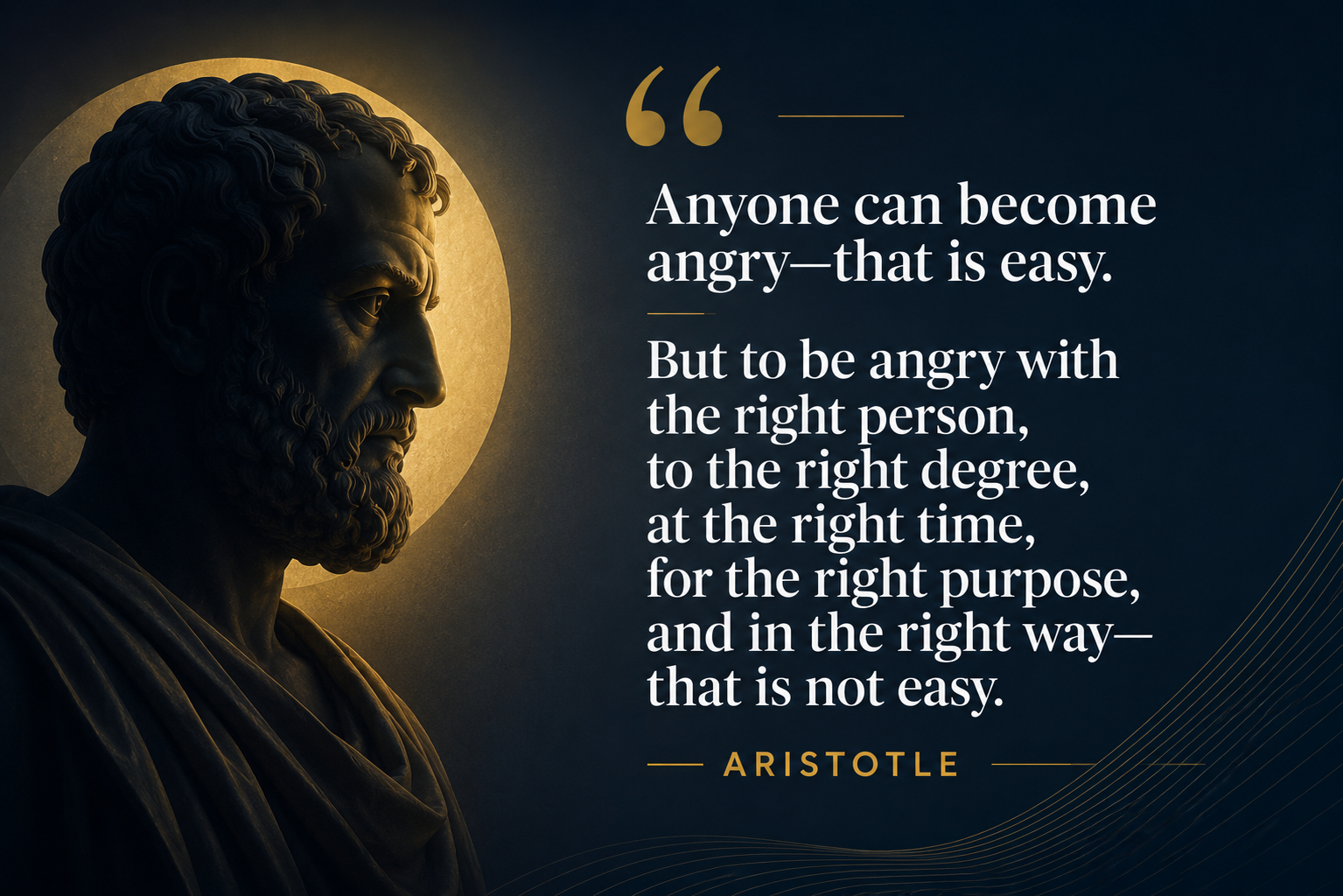
“Anyone can become angry—that is easy. But to be angry with the right person, to the right degree, at the right time, for the right purpose, and in the right way—that is not easy.” — Aristotle
Aristotle
Greek philosopher and polymath
The quote by Aristotle highlights one of the most important aspects of emotional intelligence. It is about managing emotions wisely. Aristotle does not suggest that anger is bad or that one should avoid it. Instead, he teaches that anger is a natural human emotion.
It can serve a positive purpose when we express it thoughtfully. Most people experience anger when they feel hurt. It is the same when they are disappointed or unfairly treated. The challenge is not avoiding anger altogether.
It is all about learning how to channel it in a way that leads to understanding. It should lead to growth and positive change. The ability separates impulsive reactions from mature responses.
Why Anger Can Be a Positive Force
Many people view anger as a negative emotion. However, anger itself is not the problem. In fact, anger often signals that something important matters to us. It motivates us to stand up for ourselves.
We can defend others and address injustice. In that way, we can improve the difficult situations. We need to express it appropriately. With that, we can encourage honest conversations and strengthen the boundaries.
We can also inspire meaningful action. We should not allow our emotions to control us. Aristotle encourages us to use emotions as valuable guides.
The quote reminds us that true emotional strength comes from balancing passion with wisdom. Responding calmly and thoughtfully creates better outcomes than reacting impulsively.
The Power of Emotional Intelligence
Aristotle's words emphasize the importance of self-awareness and self-control. Being emotionally intelligent means recognizing our feelings. At the same time, we can also consider the feelings of others. It involves choosing our words carefully.
We need to understand the situation. We must respond in a way that solves problems instead of creating new ones. People who master this skill build stronger relationships. They can earn greater trust.
They can handle situations, including challenges, more effectively. They understand that timing and intention matter as much as emotions. They know how to communicate properly.
A Lesson for Everyday Life
The quote offers an optimistic reminder that emotions are not weaknesses. They serve as opportunities for growth. Anyone can react in the heat of the moment.
However, learning to express emotions with wisdom is a lifelong skill. We must carry patience and purpose in what we speak. It will lead to personal success and healthier relationships.
Aristotle teaches us that strength is not found in suppressing emotions. We need to use them wisely. We must learn to manage anger with understanding and balance. In that way, we can develop emotional intelligence. We can navigate life with confidence and maturity.